You’re out riding with friends. You stop for a break at a café. Your bikes are leaning against the wall, one behind the other. A sudden gust of wind, the handlebar turns, your bike starts to roll and the frame hits exactly where you really don’t want it to. One sobering look at the top tube: carbon damage.
At ARC8, carbon is our material of choice. It allows us to build extremely lightweight, stiff and durable frames while giving us a great deal of freedom in terms of shape and construction. These are qualities that perfectly match what we want to achieve with our bikes: high-quality, timeless bicycles. But carbon also has another side that gets talked about far less:
What happens to a carbon frame when it cracks?
Carbon fibres can, in principle, be recovered. One way of doing this is through a process known as pyrolysis. High temperatures are used to separate the resin from the fibres. Processes like this are already used in industries such as aerospace and wind energy. However, the recovered fibres no longer have exactly the same properties as new carbon fibres. As a result, an old high-performance component generally cannot be turned into a new component of equivalent quality. Technically speaking, we are therefore talking more about downcycling than recycling. It’s not perfect, but it is certainly better than losing the fibres altogether.
A carbon frame can last a very long time. And even when damaged, repair is possible in many cases. Nevertheless, every frame eventually reaches the end of its life. After a serious crash, for example. Or in the case of frames that we deliberately push to their limits during development and quality assurance. That’s when the real problem begins: aluminium or steel can be melted down and reused as raw material. With carbon, things are considerably more complicated. Today, an old carbon frame cannot simply be turned into a new frame of equivalent quality. A truly closed material loop does not yet exist.
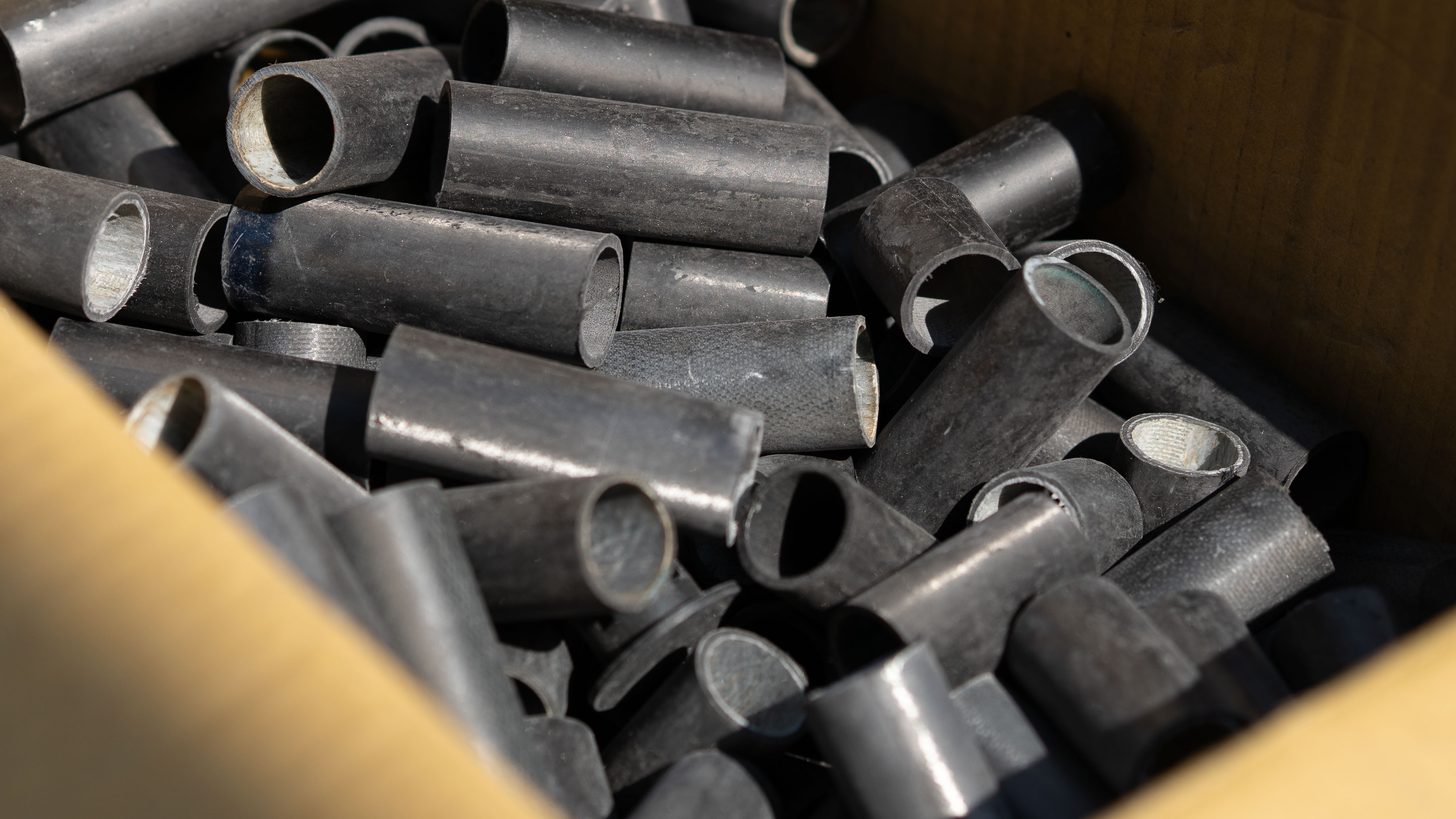
Even within the bicycle industry, there are currently very few established circular systems for end-of-life carbon frames. Many old or defective frames are stored, disposed of or ultimately incinerated. For us, it was clear that we wanted to try a different approach. So, as a first step in 2025, we asked our Swiss dealers to collect old carbon frames and components, regardless of which manufacturer they came from. We then transported the material to a pyrolysis facility in Germany. The old frames didn’t become new bike frames. But the carbon fibres they contained could be reused, giving them a second life.
For us, this was a first step.
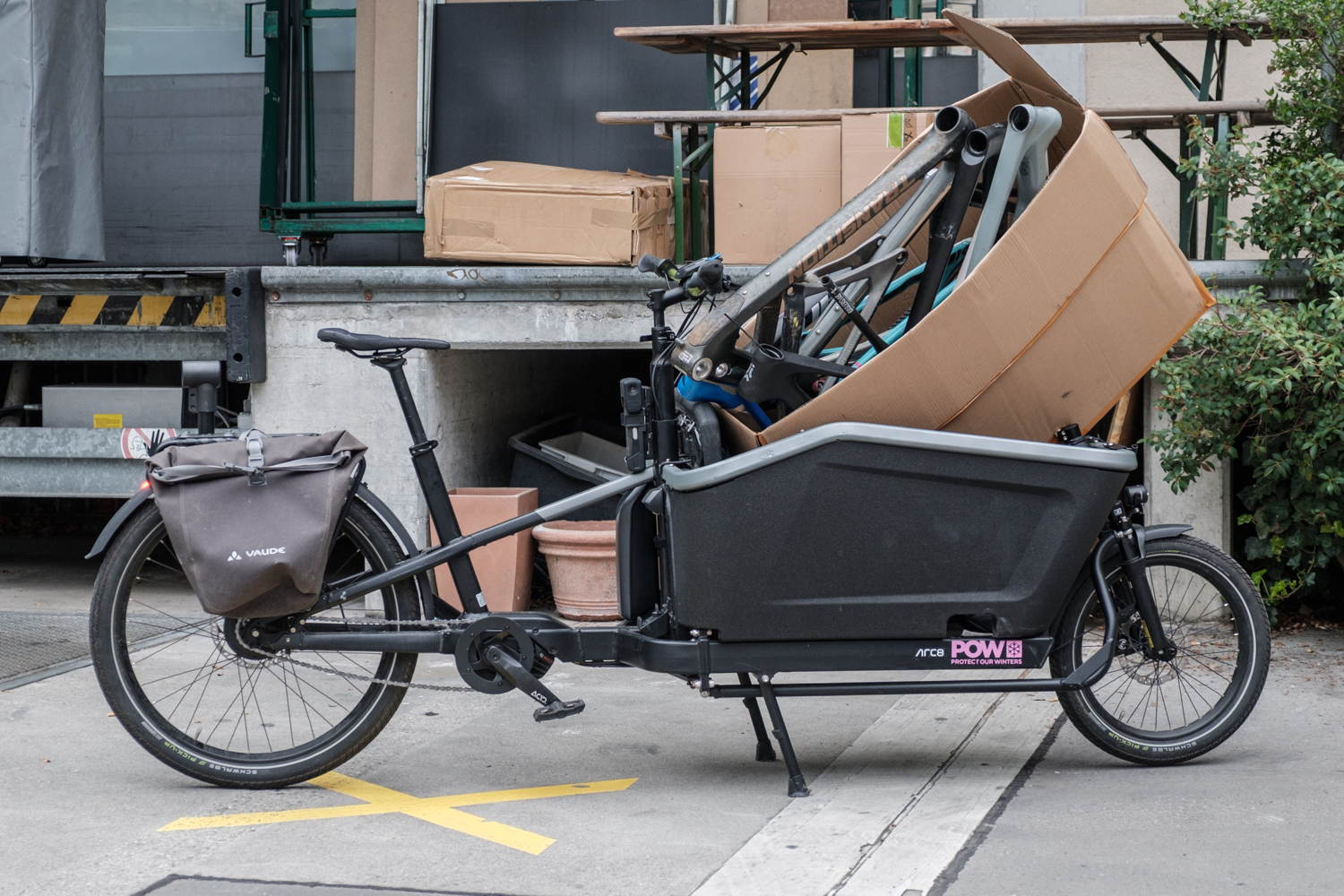
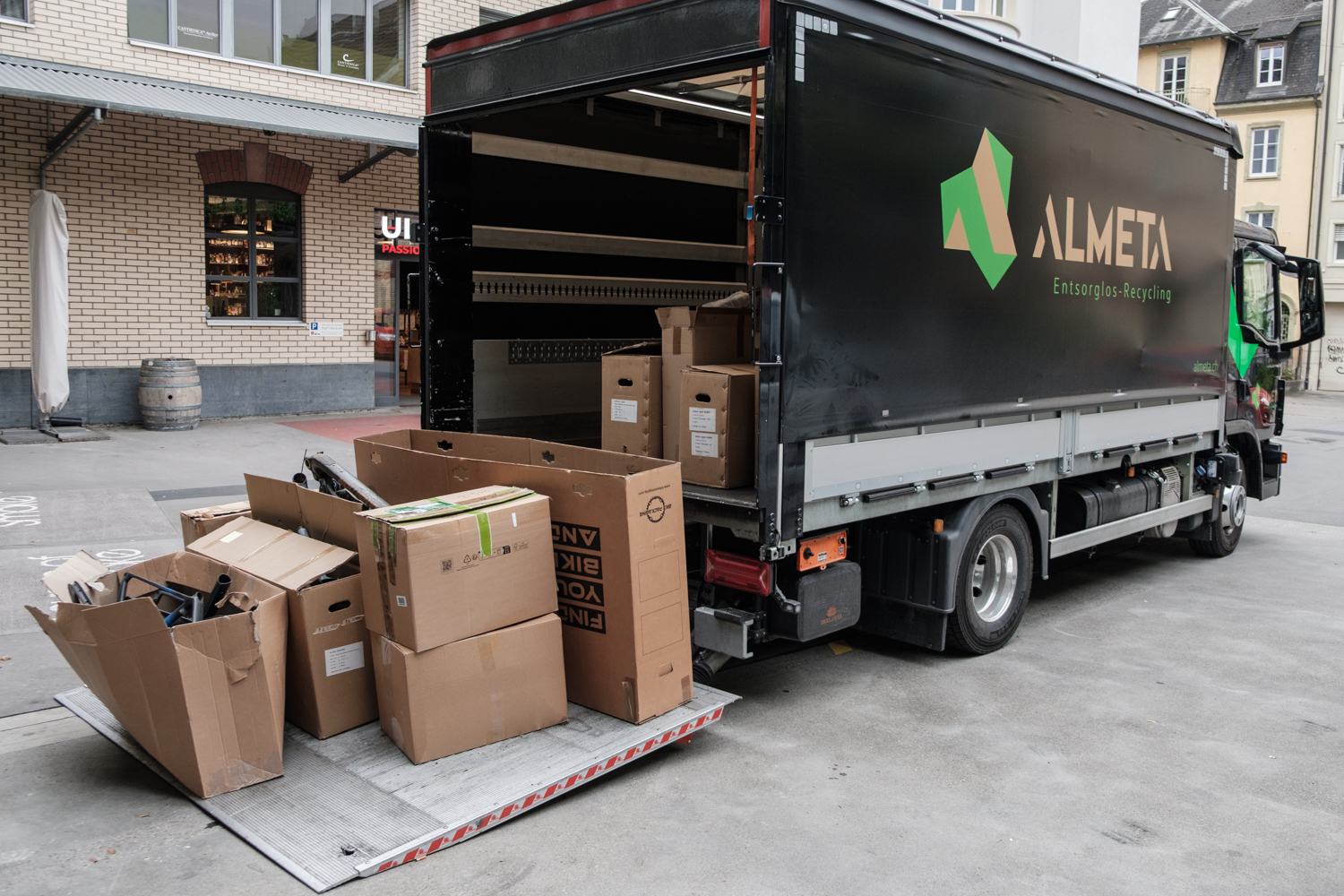
The most sustainable carbon frame at the end of its life is, first and foremost, one whose life hasn’t actually ended yet. That’s why we work with Bikerecovery, among others. Veit Schawalder, a specialist in carbon repairs, assesses damaged frames and components and professionally repairs them wherever doing so is technically viable and safe. In many cases, this can significantly extend the lifespan of a frame.
We are a small manufacturer. And compared with industries such as aerospace or wind energy, the bicycle industry accounts for only a small share of global carbon consumption. Nevertheless, we produce carbon bikes. So for us, that also means taking responsibility for the question of what happens to this material at the end of its life. Since 2025, we have been part of the Sustainability Alliance of Sport Equipment Manufacturers, or SASEM*.
The initiative, founded by Composites United, now brings together around 40 companies, research institutions, recycling specialists and technology partners from seven countries. Their shared goal is to find meaningful ways of returning materials from end-of-life sporting goods back into the production cycle. This isn’t just about developing new recycling technologies. Questions such as these are just as important:
And what processes do recyclers need to turn old products back into usable raw materials?
These are questions that a single manufacturer can hardly solve on its own. But if we all pull in the same direction, perhaps together we can make it happen.
We don’t want to promise a circular economy here that doesn’t yet exist. Carbon remains a technically fascinating material with properties we don’t want to give up in our bikes. At the same time, we need to address the disadvantages that come with it. Repairing, extending product lifespans, recovering materials and working together to develop better circular systems: for us, this is currently the most meaningful way forward.
So that one day, an old carbon frame no longer ends up as waste, but becomes a resource again.